Steps
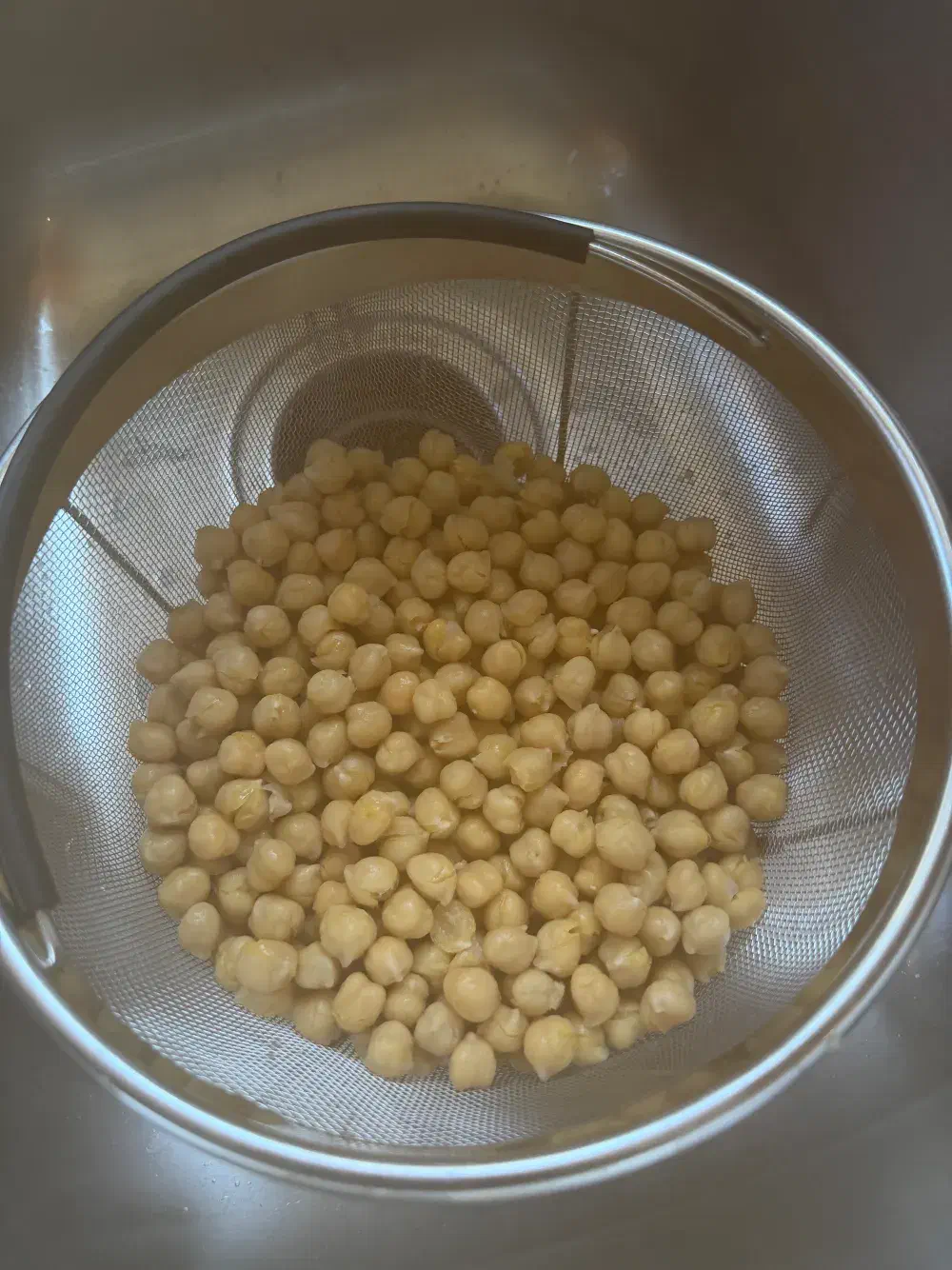
Cook the chickpeas
I use an Instant Pot. Put the dried chickpeas in the pot and cover them with 2 inches of water.
Cook on high pressure for 40 minutes, then let it natural release: let it sit for 10 minutes after cooking before relieving the pressure.
Drain the chickpeas and rinse them under cold water.
Steep the garlic in lemon juice
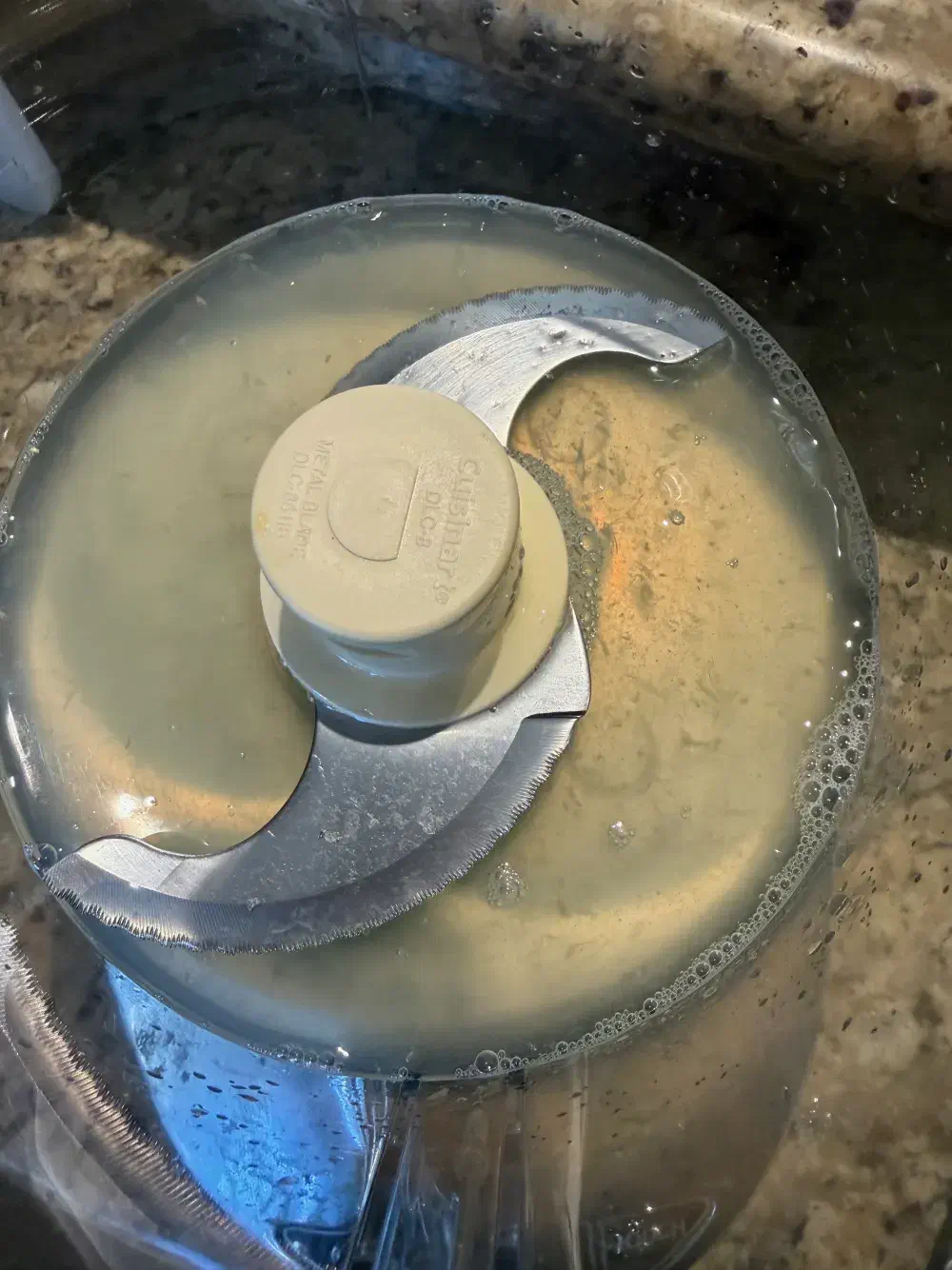
Juice the lemons. Always squeeze fresh lemons. I want the lemon juice to just barely cover the bottom blade of my food processor, which is around half a cup.
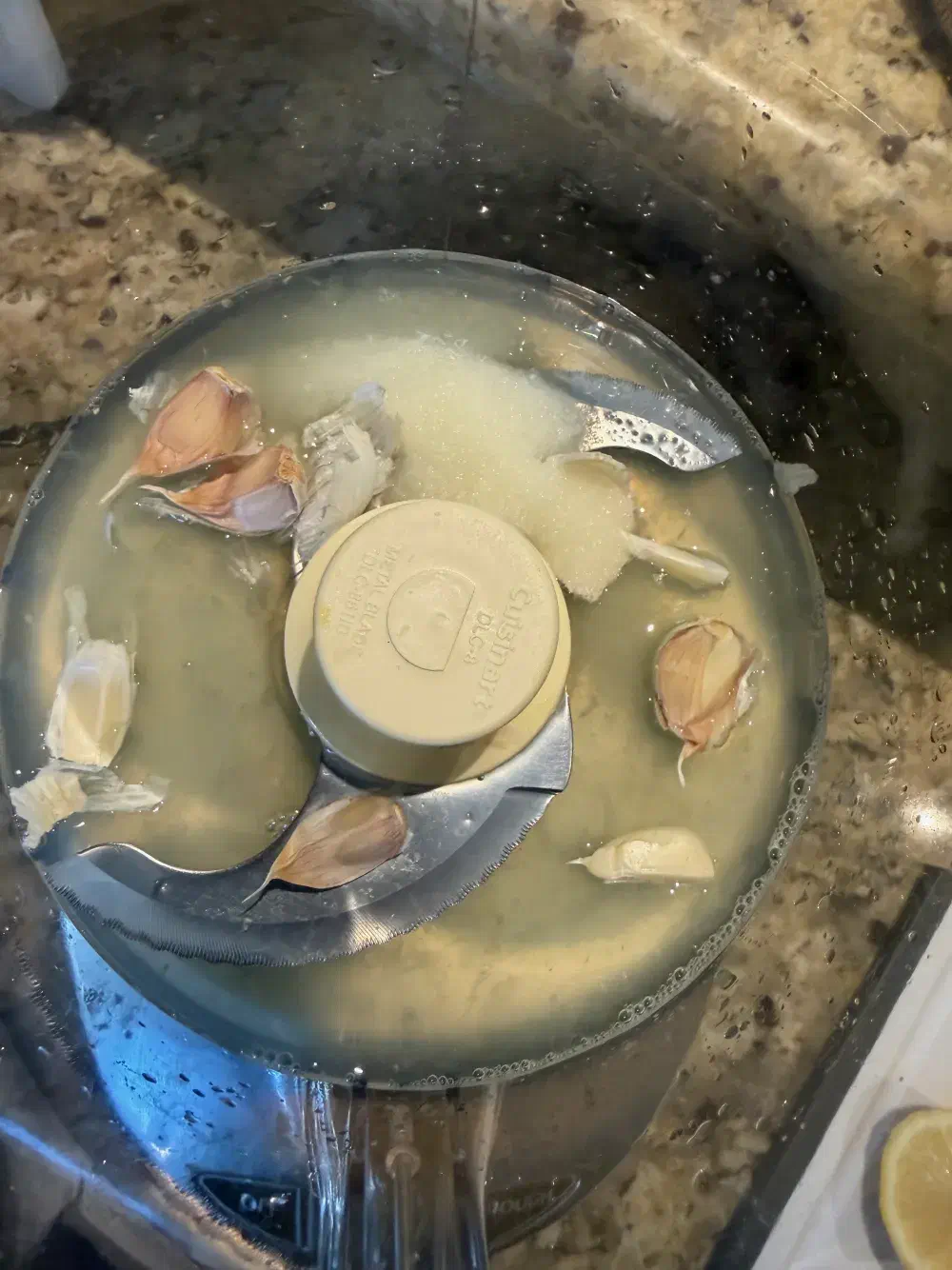
Put the lemon juice, the garlic cloves (whole, peels still on), and 1 tbsp salt in the food processor.
Run the food processor for several seconds, until the garlic is well minced.
Let it sit and steep for about 10 minutes. I like to do this when the Instant Pot finishes cooking and I’m waiting for the natural release.
Strain, then whip the tahini
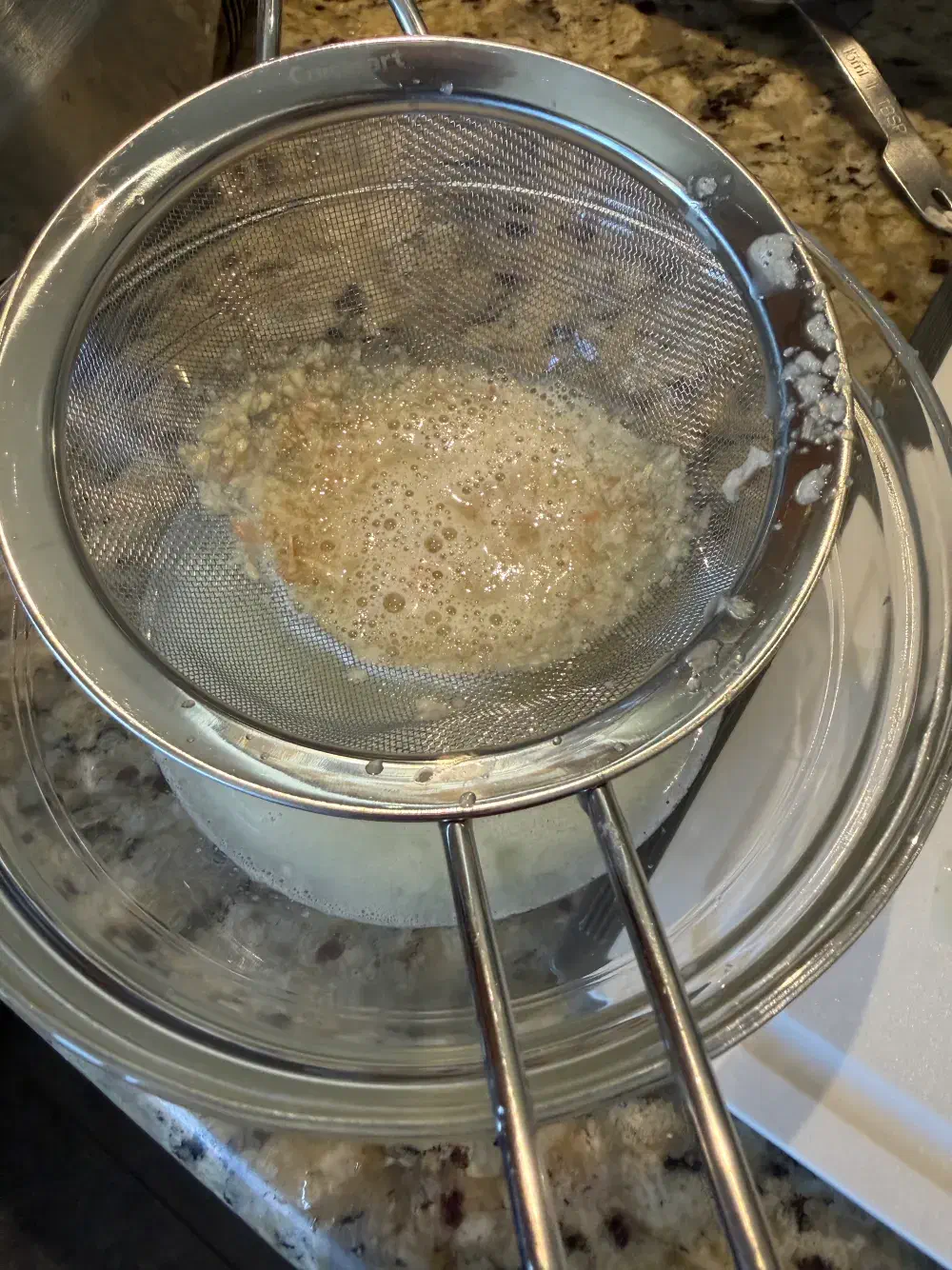
Strain the lemon/garlic mixture through a fine-mesh strainer. I use a spatula to press the garlic pulp and get out all the juice.
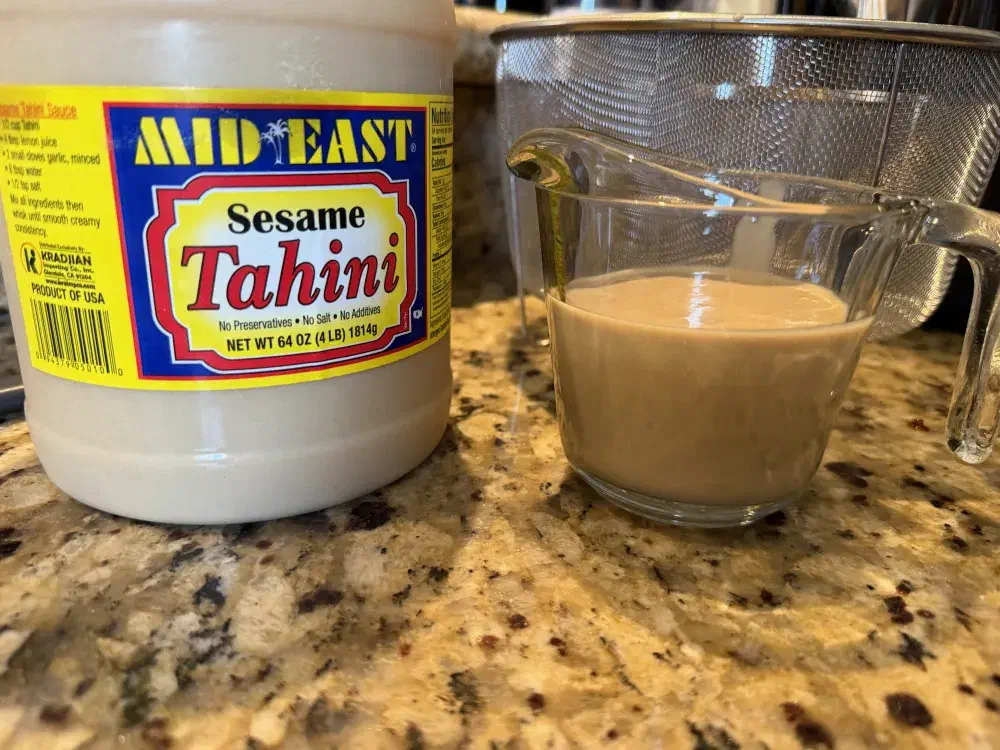
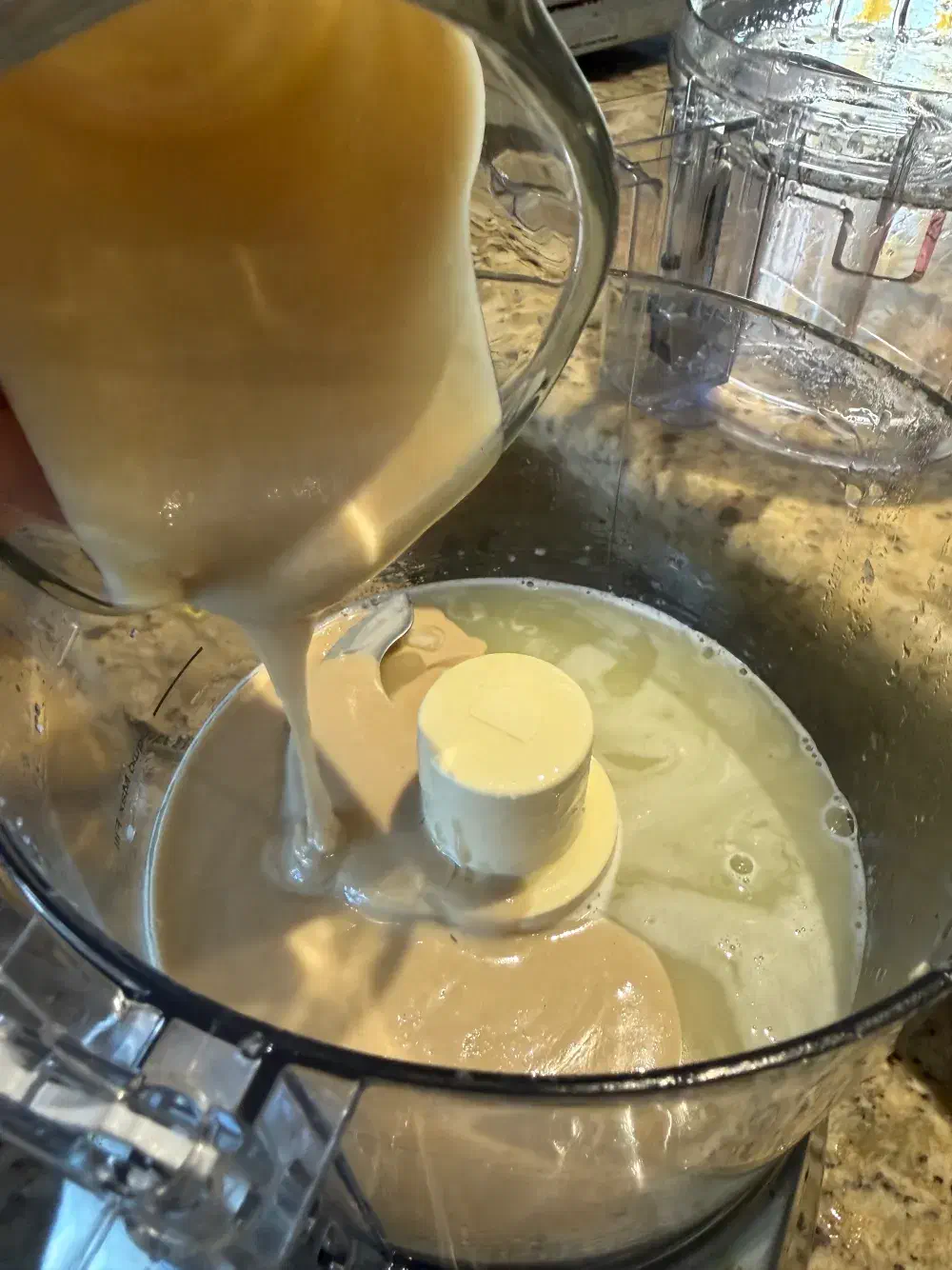
Put the strained liquid back in the food processor and add the tahini.
Turn on the food processor to mix everything together. This usually takes several seconds.
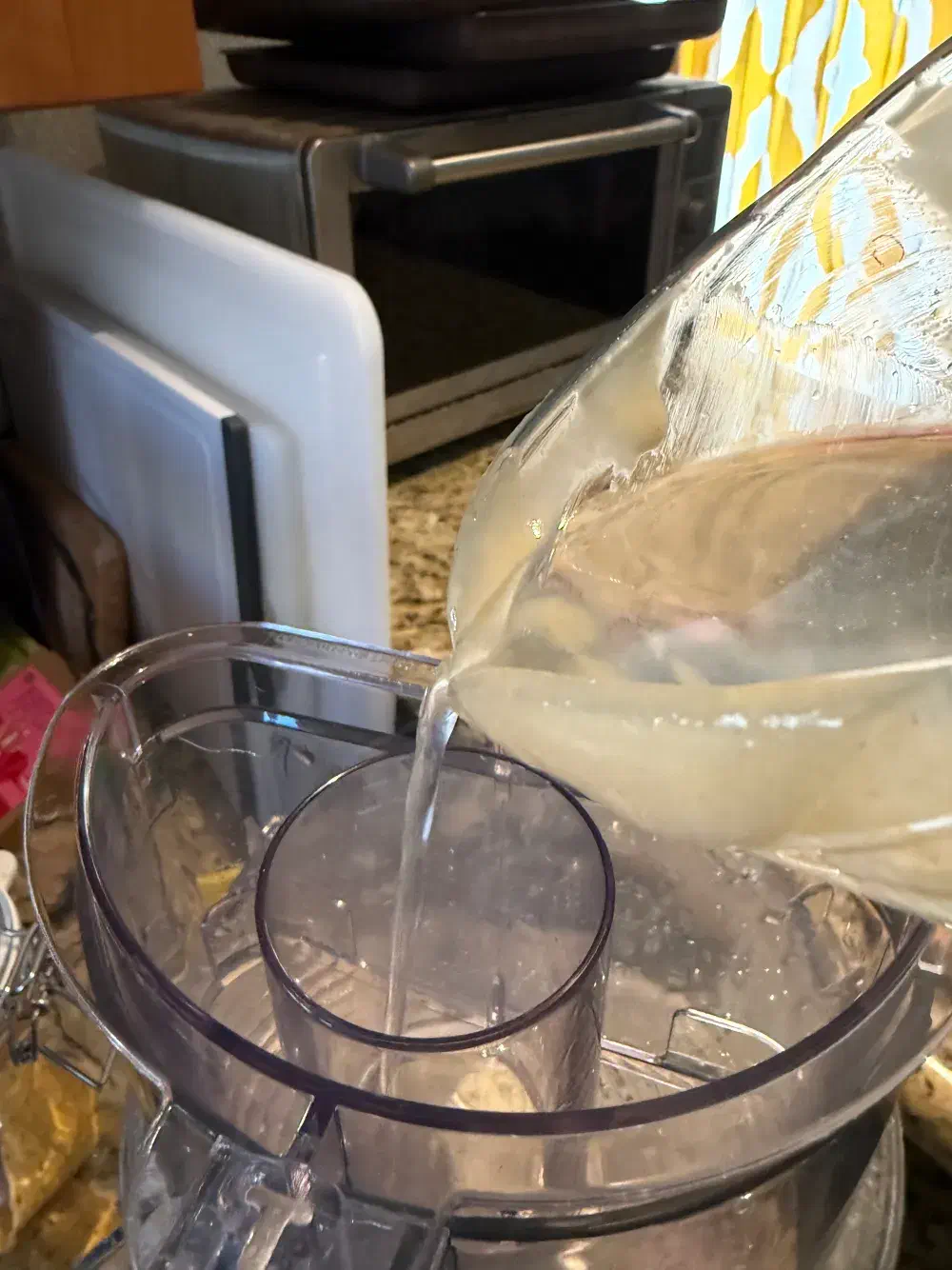
While it’s running, add a thin drizzle of cold water through the feed tube. I usually use the same measuring cup I used for the tahini. Alternately, you could use a measuring spoon and add cold water 1 tbsp at a time to avoid adding too much.
Stop the food processor every now and then to check the consistency. You want it to be pale and frothy.
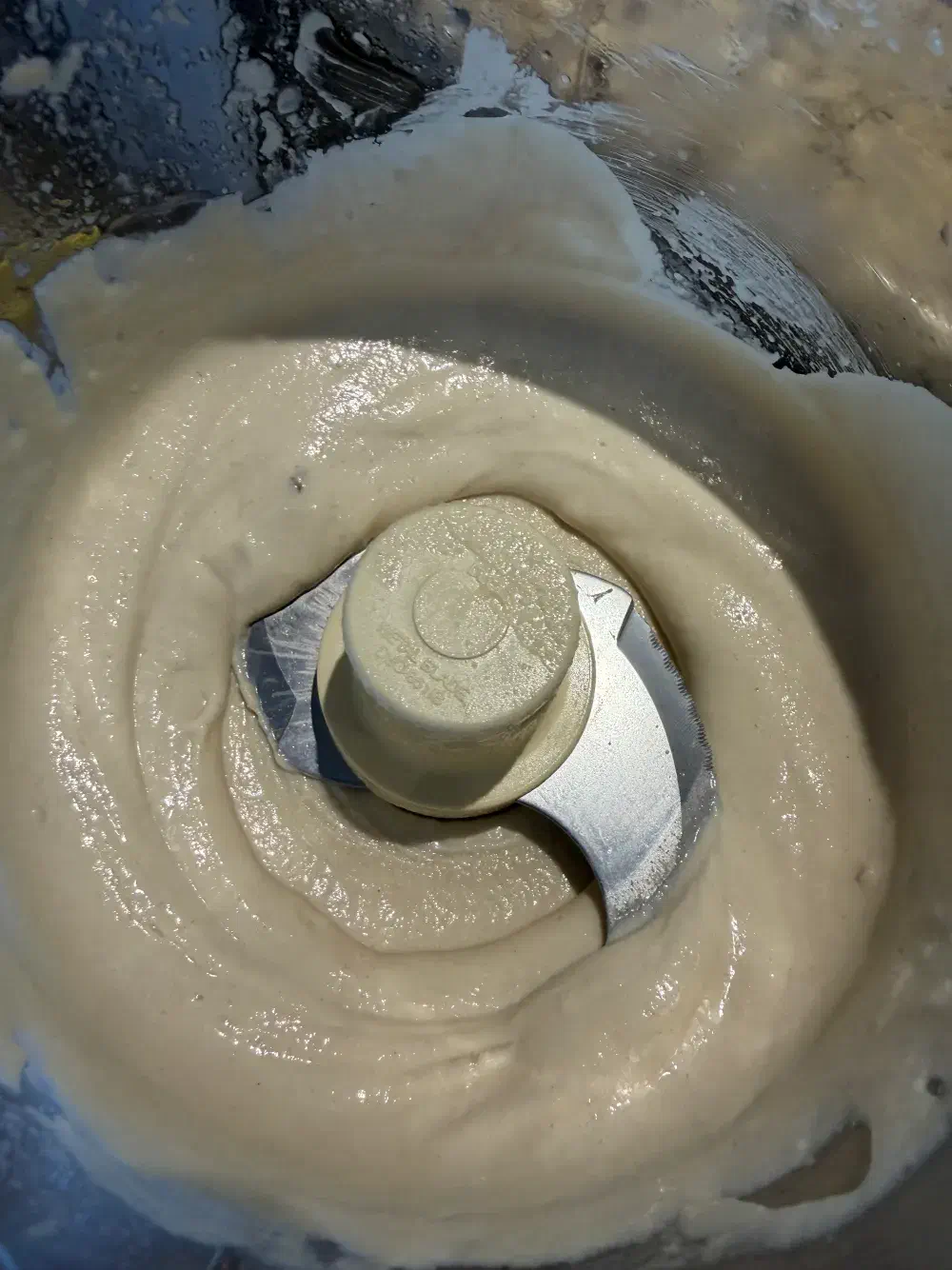
Add the chickpeas and blend for a long time
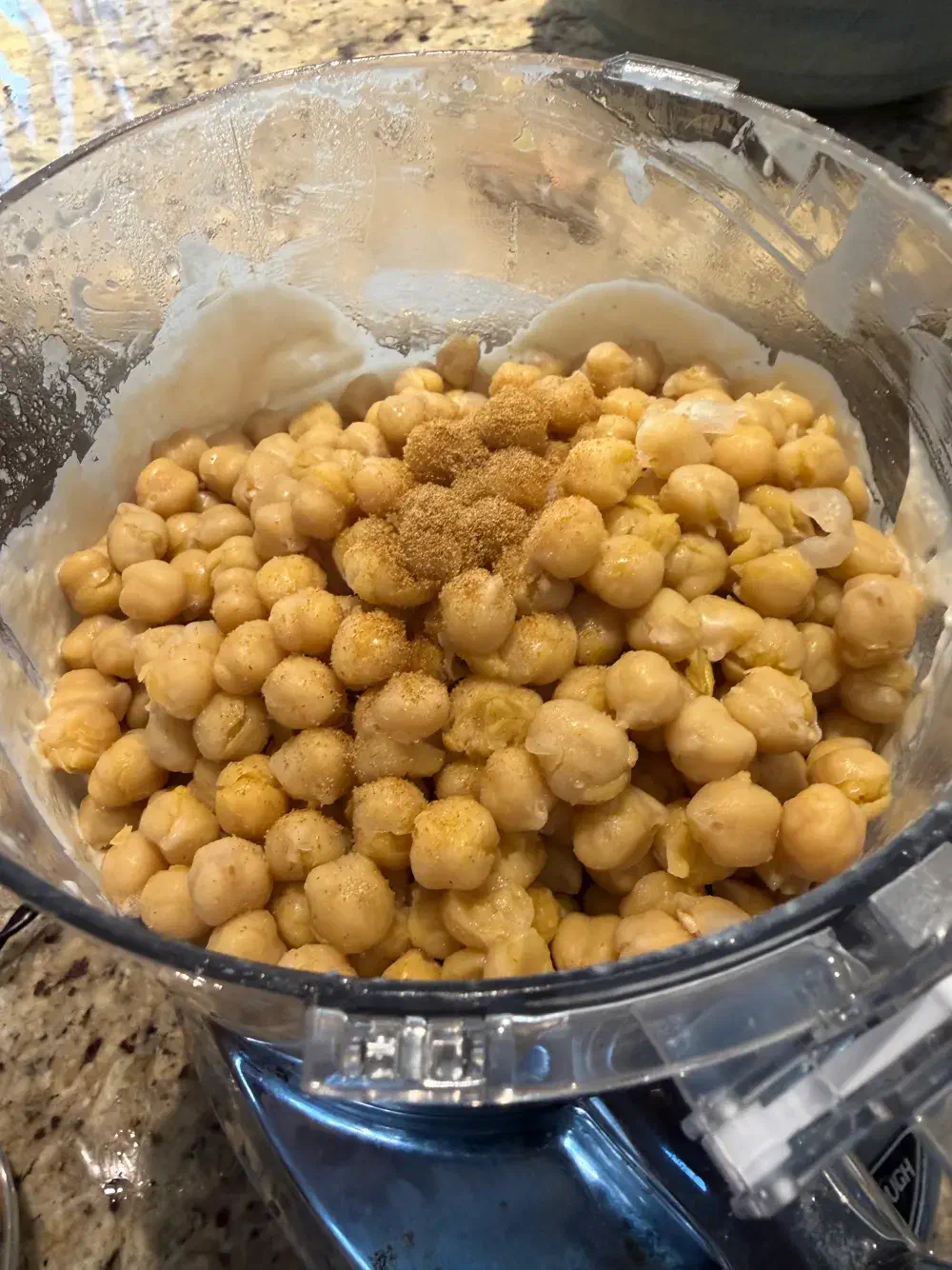
Once the tahini is blended, add the cooked chickpeas and (optionally) the ½ tsp of cumin.
Turn on the food processor and let it run for a good 4 to 5 minutes. This is the secret to making the hummus nice and smooth and creamy. You might need to give your food processor a break every couple of minutes so it doesn’t overheat.
While it’s running, again drizzle a small stream of water into the feed tube (or use a measuring spoon). Watch the consistency. If the mixture is looking too thick, add a tiny bit more water and let it thin out a bit.
Once the hummus looks like a good consistency, transfer it to a bowl or some Tupperware and put it in the fridge. “Good consistency” is subjective: I like it to be smooth and creamy, but also rigid enough to hold some shape.
Serving suggestions
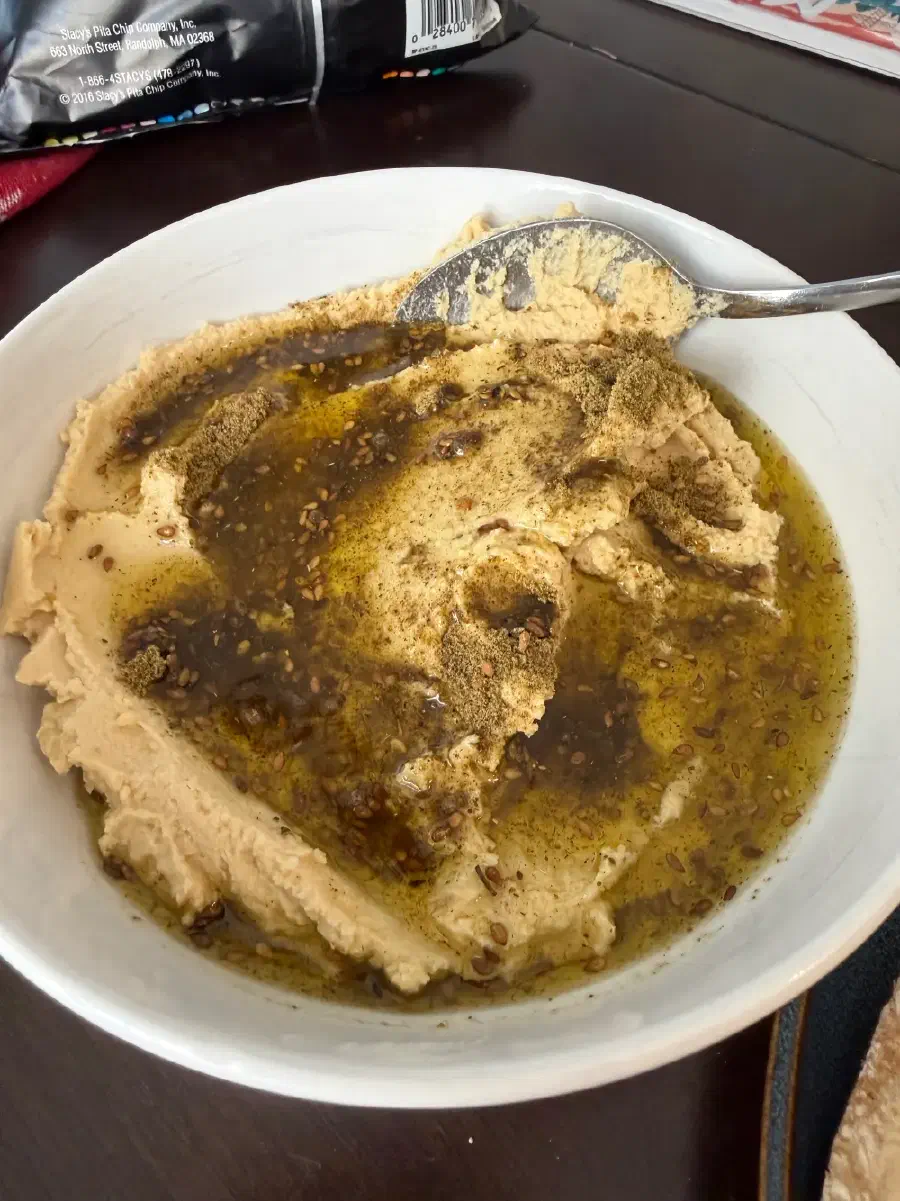
Put the hummus in a bowl and sprinkle za’atar or paprika on top. Drizzle liberally with olive oil.